


Inside the Light Bed: What Each Wavelength Is Actually Doing
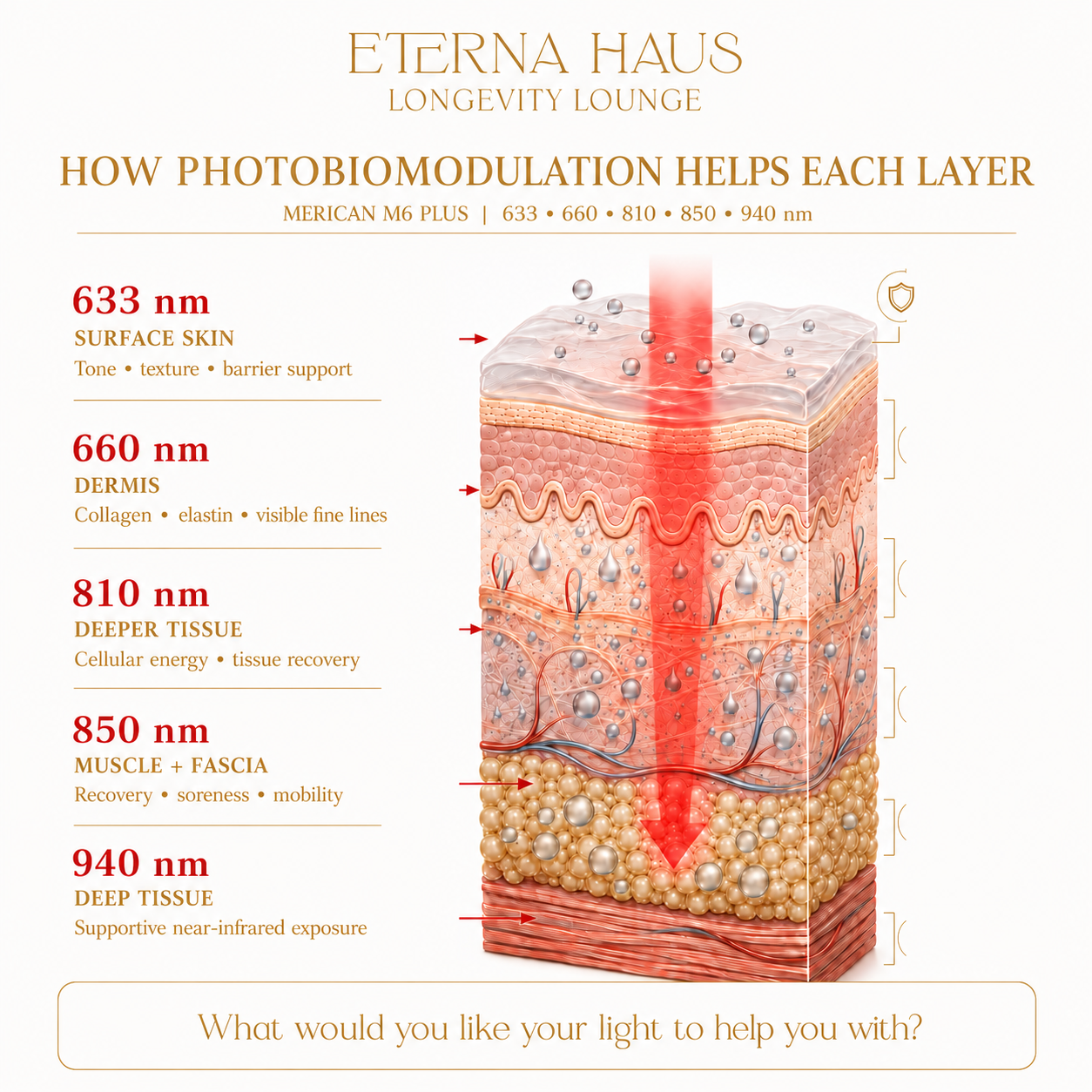
Our Full Body LED Photobiomodulation Therapy Bed isn’t just “red light.” It’s five distinct wavelengths of red and near-infrared light, each chosen because it does something different inside the body. Here’s what’s actually happening, wavelength by wavelength, so you know exactly what you’re getting in every session.
What Is Photobiomodulation, Really?
Photobiomodulation is the use of specific wavelengths of red and near-infrared light to influence what’s happening inside your cells. The light is absorbed by a compound called cytochrome c oxidase, an enzyme sitting in the membrane of your mitochondria — the part of the cell responsible for producing energy in the form of ATP (Hamblin, AIMS Biophysics, 2017).
When cytochrome c oxidase absorbs light at the right wavelength, it briefly releases nitric oxide that had been blocking it, which allows the mitochondria to run more efficiently and produce more ATP. That single event sets off a cascade: increased ATP availability, a short burst of reactive oxygen species that acts as a signal rather than a stressor, and activation of transcription factors like NF-κB, which switches on genes involved in cell survival, anti-inflammatory activity, and repair (de Freitas & Hamblin, IEEE Journal of Selected Topics in Quantum Electronics, 2016).
Different wavelengths penetrate tissue to different depths, which is exactly why our bed uses five of them together instead of just one.
The Five Wavelengths in Our Bed — and What Each One Does
633nm — Visible Red Light
At the shorter end of our spectrum, 633nm light penetrates primarily into the skin’s surface layers — the epidermis and upper dermis. It’s one of the most studied wavelengths for skin, with research showing support for collagen production, improved skin tone and texture, and faster surface-level healing. Because it stays relatively shallow, this is the wavelength doing the most work for your skin’s appearance and glow.
660nm — Visible Red Light
Just beyond 633nm, 660nm light penetrates slightly deeper while still working largely in and just beneath the skin. It sits close to one of cytochrome c oxidase’s peak absorption points, which makes it especially effective for stimulating cellular energy production at the surface level. This is the wavelength most associated with supporting circulation and accelerating the skin’s natural recovery process.
810nm — Near-Infrared Light
Crossing into near-infrared, 810nm light travels meaningfully deeper into the body — reaching muscle tissue, connective tissue, and deeper vascular structures rather than stopping at the skin. This depth is what makes it valuable for muscle recovery: it reaches the tissue that’s actually sore or fatigued after training, supporting mitochondrial energy production where it’s needed most.
850nm — Near-Infrared Light
850nm penetrates to a similar or slightly greater depth than 810nm and is one of the most extensively researched near-infrared wavelengths for recovery and inflammation support. It’s frequently used in clinical photobiomodulation research because it balances strong tissue penetration with efficient absorption by cytochrome c oxidase, making it a workhorse wavelength for deep-tissue and joint-adjacent support.
940nm — Near-Infrared Light
At the far end of our spectrum, 940nm behaves a little differently. It’s absorbed more by water and hemoglobin in the blood than the other wavelengths, which is part of why it’s associated with supporting circulation and a warming, relaxing sensation throughout a session. Paired with the deeper-penetrating 810nm and 850nm wavelengths, it rounds out the full-spectrum effect rather than working in isolation.
Why We Use Five Wavelengths Instead of One
A single wavelength only reaches one depth of tissue and triggers one narrow set of effects. By layering all five together — from surface-level 633nm down to deep-penetrating 850nm, with 940nm supporting circulation throughout — a single session addresses skin, muscle, and circulation simultaneously instead of requiring separate treatments for each. It’s also part of why we built this as a full-body immersive capsule rather than a standing panel: lying down and being surrounded by light on all sides means every wavelength reaches far more of your body’s surface area at once.
What a Session Actually Looks Like
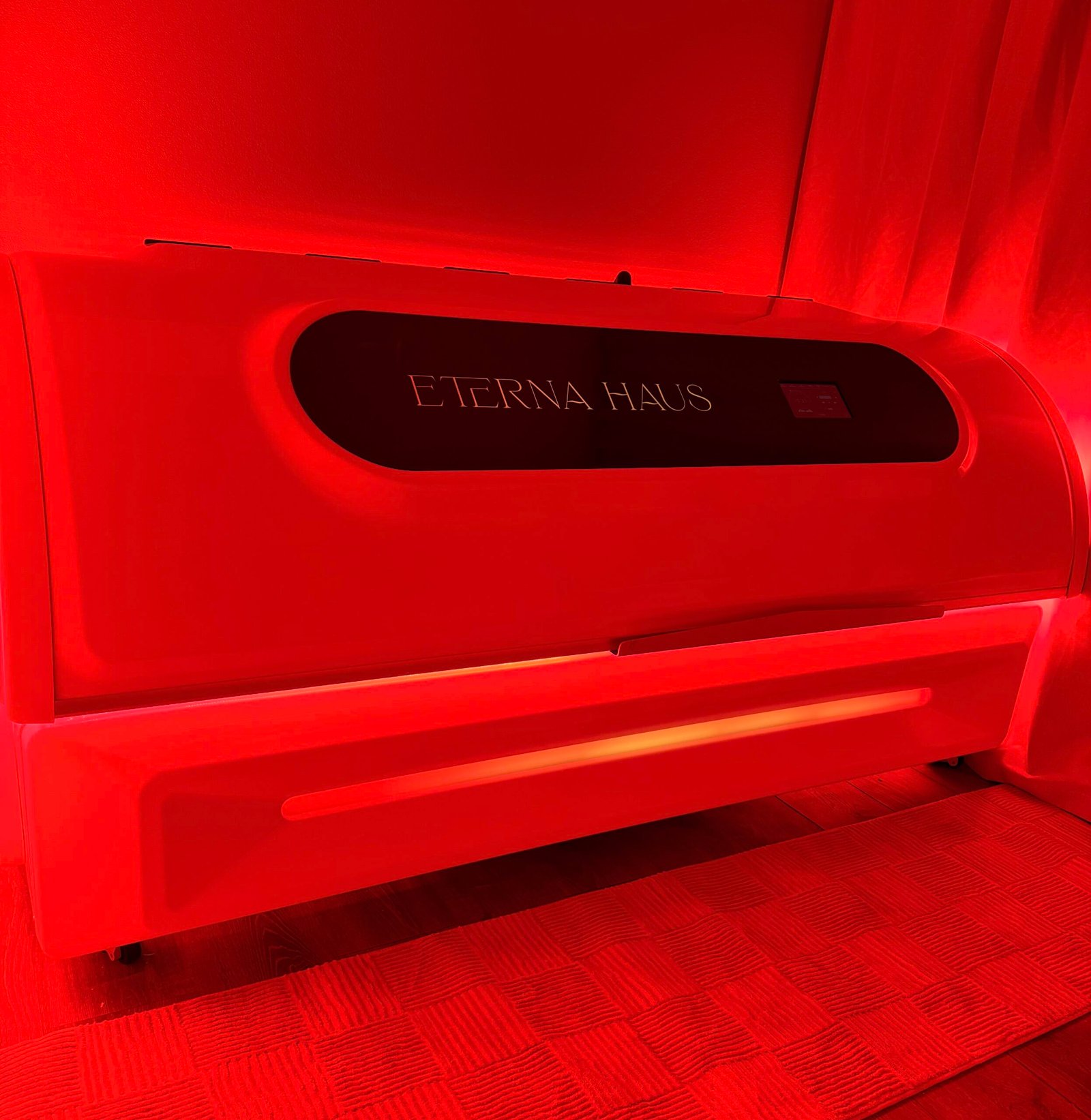
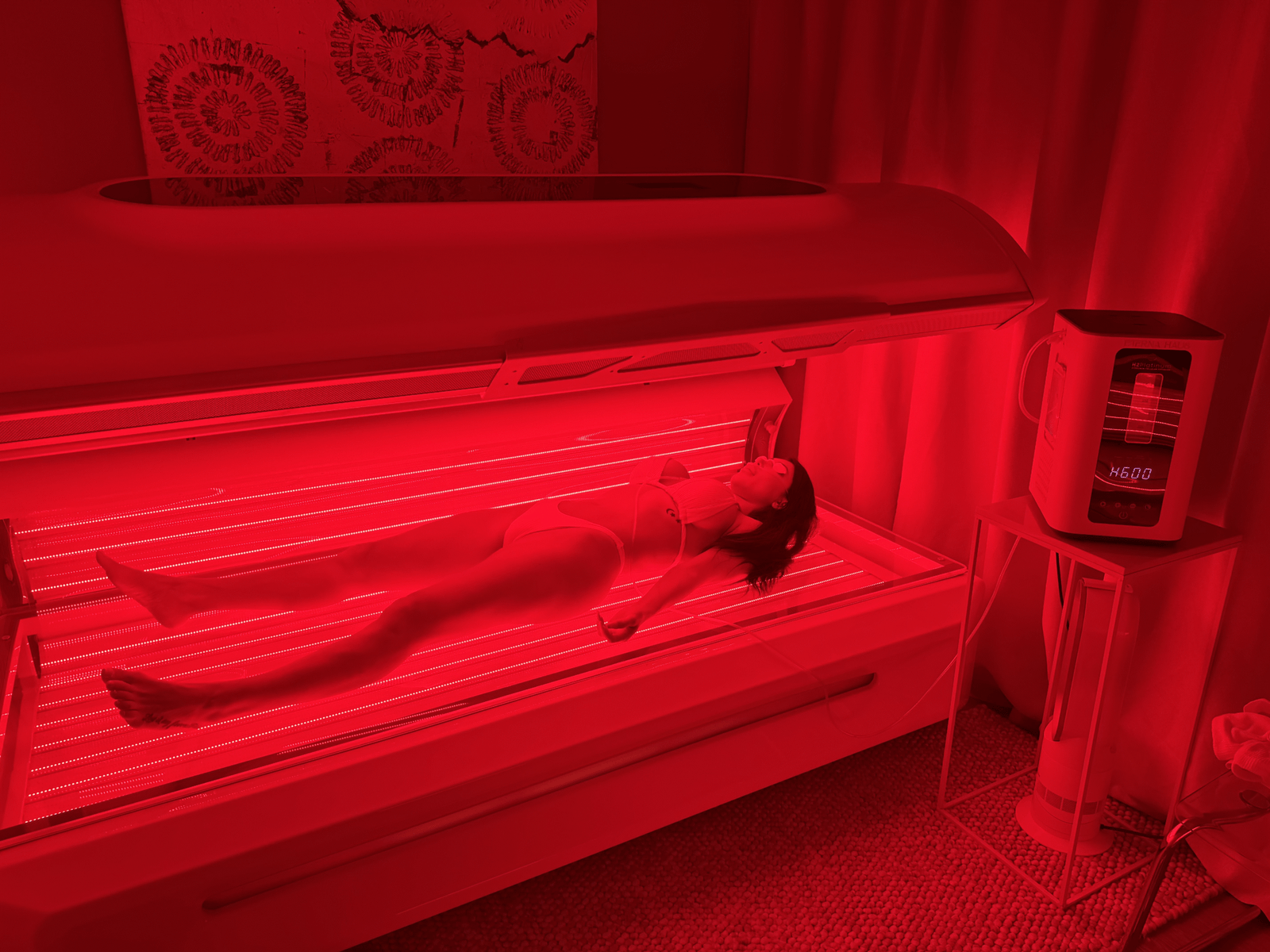
Our LED Photobiomodulation Therapy Bed is an oversized 7.5-foot capsule that fully reclines you inside the light rather than having you stand between panels. Sessions run 11 minutes — though we give you 15 — and pulse frequencies can be customized to your goal for the day, whether that’s relaxation, athletic recovery, mental clarity, or skin wellness. No rotating, no adjusting position. You simply lie back and let all five wavelengths work at once.
Many clients pair their session with our H2 Platinum Molecular Hydrogen Therapy as an add-on, combining light-driven cellular energy production with hydrogen’s antioxidant support for an even more complete recovery session.
The Science
Hamblin, M.R. “Mechanisms and applications of the anti-inflammatory effects of photobiomodulation.” AIMS Biophysics, 2017. View Research
de Freitas, L.F. & Hamblin, M.R. “Proposed Mechanisms of Photobiomodulation or Low-Level Light Therapy.” IEEE Journal of Selected Topics in Quantum Electronics, 2016. View Research
Karu, T.I. “Multiple roles of cytochrome c oxidase in mammalian cells under action of red and IR-A radiation.” IUBMB Life, 2010. View Research
These wellness therapies are designed to support the body’s natural recovery and restoration processes and are not intended to diagnose, treat, cure, or prevent any disease.
Why We Use the 600 mL/min Flow Rate Machine
Our Platinum Molecular Hydrogen Therapy runs on the H2 Platinum H600 — a 600 mL/min hydrogen flow rate machine, one of the higher output rates available for in-studio use. A higher flow rate means more dissolved hydrogen gas delivered per session, so you can inhale a more concentrated dose in the same amount of time rather than needing a longer session to get comparable exposure.
Because it pairs so well with photobiomodulation, molecular hydrogen is available as an add-on to your Full Body LED Photobiomodulation Therapy Bed session — or on its own.
Leave a Reply